
Introduction
Building a home from the ground up is an exciting opportunity to create a living space that meets your family’s unique needs and preferences. However, constructing a house requires significant financial resources, and many people turn to home construction loans to help fund the process.
A home construction loan is specifically designed to cover the costs associated with building a new home. Unlike traditional mortgages that finance an existing property, construction loans provide funding throughout various stages of the building process.
This guide explains how home construction loans work, their benefits, eligibility requirements, application process, and important factors borrowers should consider before applying.
What Is a Home Construction Loan?
A home construction loan is a short-term financing option that helps individuals pay for land purchases, construction materials, labor costs, permits, and other expenses related to building a new home.
Funds are typically released in stages, often referred to as “draws,” as construction progresses and specific milestones are completed.
Once construction is finished, the loan may be converted into a traditional mortgage or refinanced into a long-term home loan, depending on the lender and loan structure.
How Home Construction Loans Work
Construction loans differ from standard home loans in several ways.
Application and Approval
Borrowers submit financial information, construction plans, project budgets, and contractor details for lender review.
Loan Approval
The lender evaluates the borrower’s financial profile, project feasibility, and construction plans before approval.
Funds Disbursement
Rather than receiving the entire loan amount upfront, funds are released in phases throughout the construction process.
Construction Monitoring
Lenders may conduct inspections to verify that construction milestones have been completed before releasing additional funds.
Loan Conversion
After construction is completed, the loan may convert into a permanent mortgage or require refinancing.
Common Uses of Home Construction Loans
Home construction loans may be used for:
- Building a primary residence
- Constructing a custom home
- Purchasing land and building a home
- Major home rebuilding projects
- Residential property development
- Significant home expansion projects
Specific uses vary by lender and loan program.
Benefits of Home Construction Loans
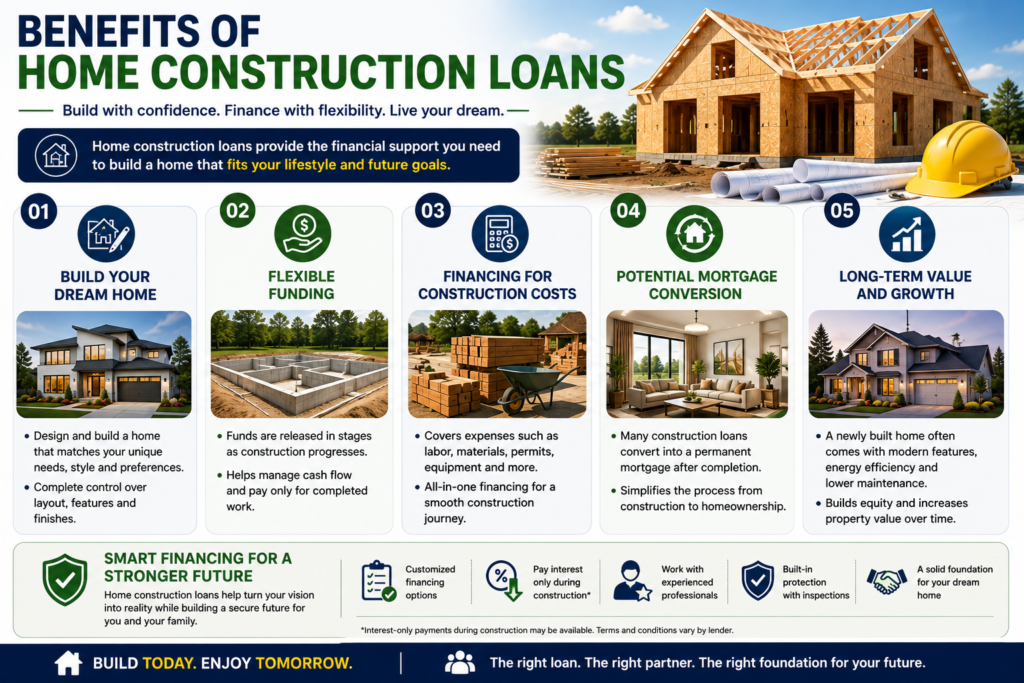
Build a Custom Home
Borrowers can design a home that matches their preferences and lifestyle needs.
Flexible Funding Structure
Funds are distributed as construction progresses, helping manage project expenses.
Financing for Construction Costs
Construction loans may cover materials, labor, permits, and other building-related expenses.
Potential Long-Term Financing Options
Some loans allow a smooth transition into a permanent mortgage after construction is complete.
Increased Property Value
A newly constructed home may offer long-term value and modern features.
Eligibility Requirements
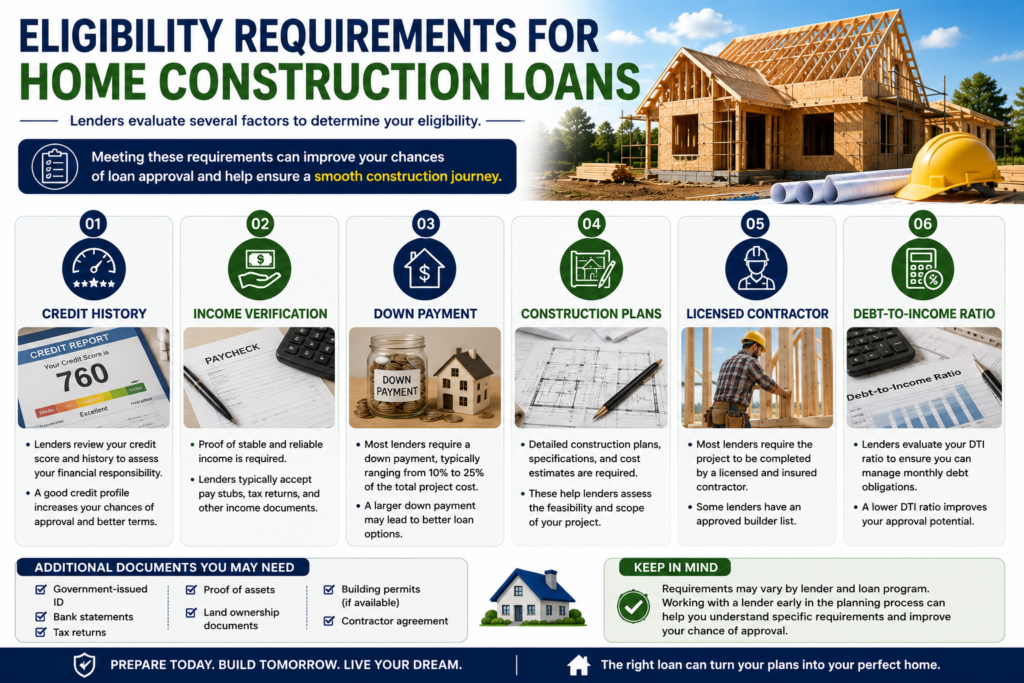
Eligibility requirements vary by lender but commonly include:
Credit History
Lenders typically review creditworthiness and financial responsibility.
Income Verification
Applicants may need to provide proof of stable income.
Down Payment
Many lenders require a down payment for construction financing.
Construction Plans
Detailed building plans and project specifications are often required.
Licensed Contractor
Lenders may require construction to be completed by approved or licensed contractors.
Debt-to-Income Ratio
Existing debt obligations may be reviewed during the approval process.
Documents Commonly Required
Applicants may need to provide:
- Government-issued identification
- Income verification
- Tax returns
- Bank statements
- Construction plans
- Contractor agreements
- Cost estimates
- Land ownership documentation
- Building permits
Requirements vary by lender and location.
How to Apply for a Home Construction Loan
Determine Your Budget
Estimate total construction costs and financing needs.
Choose a Qualified Contractor
Work with experienced professionals who can provide detailed project plans.
Gather Documentation
Prepare all required financial and construction documents.
Compare Lenders
Review available construction loan options and lending requirements.
Submit an Application
Provide complete and accurate information during the application process.
Monitor Construction Progress
Stay informed throughout the construction period and maintain communication with your lender.
Important Considerations
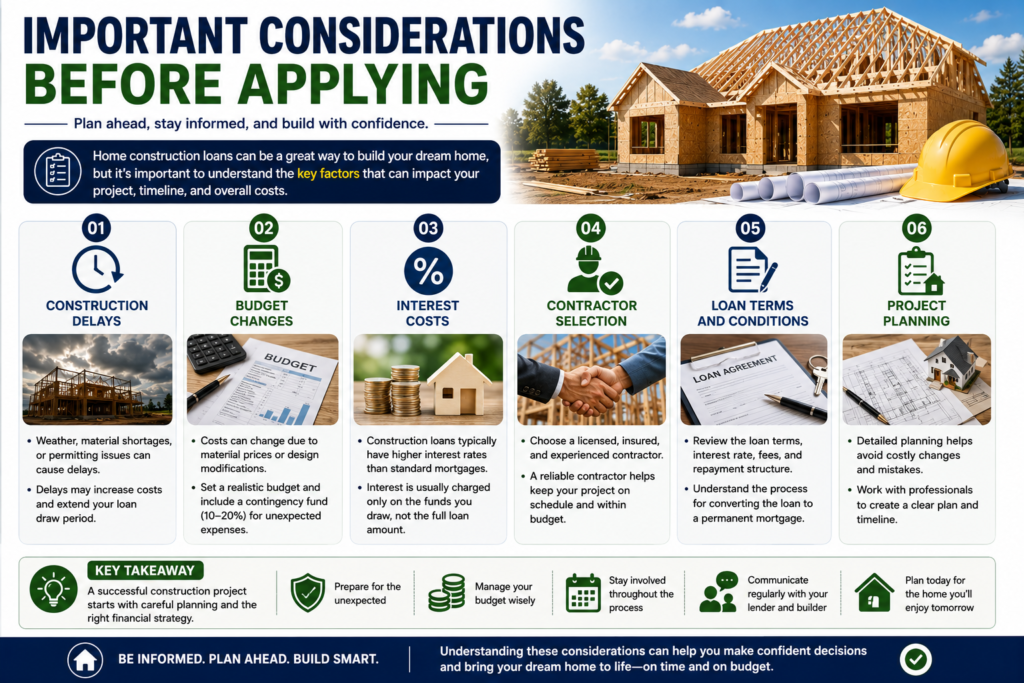
Construction Delays
Unexpected delays may affect project timelines and financing schedules.
Budget Changes
Construction costs can increase due to labor or material price fluctuations.
Interest Costs
Borrowers should understand how interest is calculated during construction.
Contractor Selection
Choosing a reputable contractor can significantly impact project success.
Loan Terms
Carefully review repayment obligations, fees, and conversion options.
Frequently Asked Questions
What is a home construction loan?
A home construction loan is financing designed specifically for building a new home or funding major residential construction projects.
How are construction loan funds distributed?
Funds are generally released in stages as construction milestones are completed.
Can a construction loan become a mortgage?
Some construction loans may convert into permanent mortgages after construction is completed.
Do I need a contractor?
Many lenders require licensed or approved contractors for construction projects.
Are construction loans different from traditional mortgages?
Yes. Construction loans finance the building process, while traditional mortgages finance completed properties.
Conclusion
Home construction loans can provide valuable financing for individuals who want to build a custom home or undertake major residential construction projects. By understanding how these loans work, reviewing eligibility requirements, comparing lenders, and planning carefully, borrowers can better navigate the construction financing process.
Before applying, take time to evaluate your budget, construction plans, and long-term financial goals to ensure that a home construction loan aligns with your needs and homeownership objectives.