
Introduction
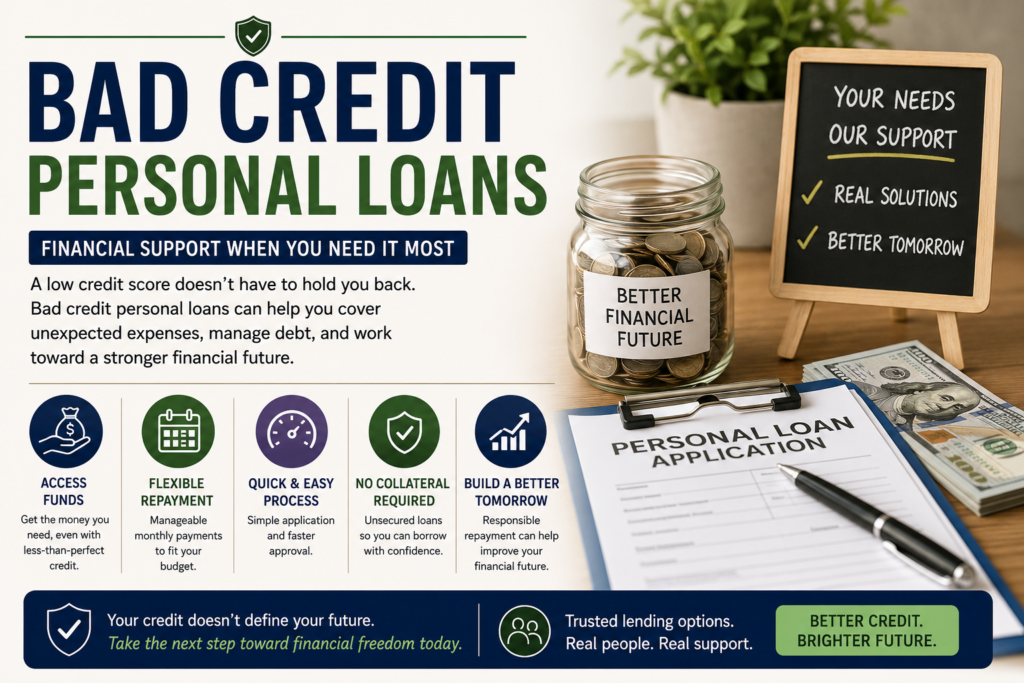
A low credit score can make borrowing money more challenging, but it does not necessarily eliminate access to financing options. Many lenders understand that financial difficulties, unexpected life events, medical emergencies, job loss, or other circumstances can negatively impact a person’s credit history.
Bad credit personal loans are designed to help individuals who may not qualify for traditional lending products due to lower credit scores or limited credit history. While these loans can provide access to needed funds, borrowers should understand how they work, the costs involved, eligibility requirements, and strategies for responsible borrowing.
This comprehensive guide explains everything you need to know about bad credit personal loans, helping you make informed financial decisions and improve your overall financial health.
What Is a Bad Credit Personal Loan?
A bad credit personal loan is a type of personal loan intended for borrowers who have lower credit scores or past credit challenges. Unlike traditional loans that often require strong credit histories, these loans may be available to individuals with imperfect credit profiles.
Bad credit personal loans are usually unsecured, meaning borrowers typically do not need to provide collateral. Loan funds may be used for various purposes, depending on lender requirements and borrower needs.
Common Reasons People Use Bad Credit Personal Loans
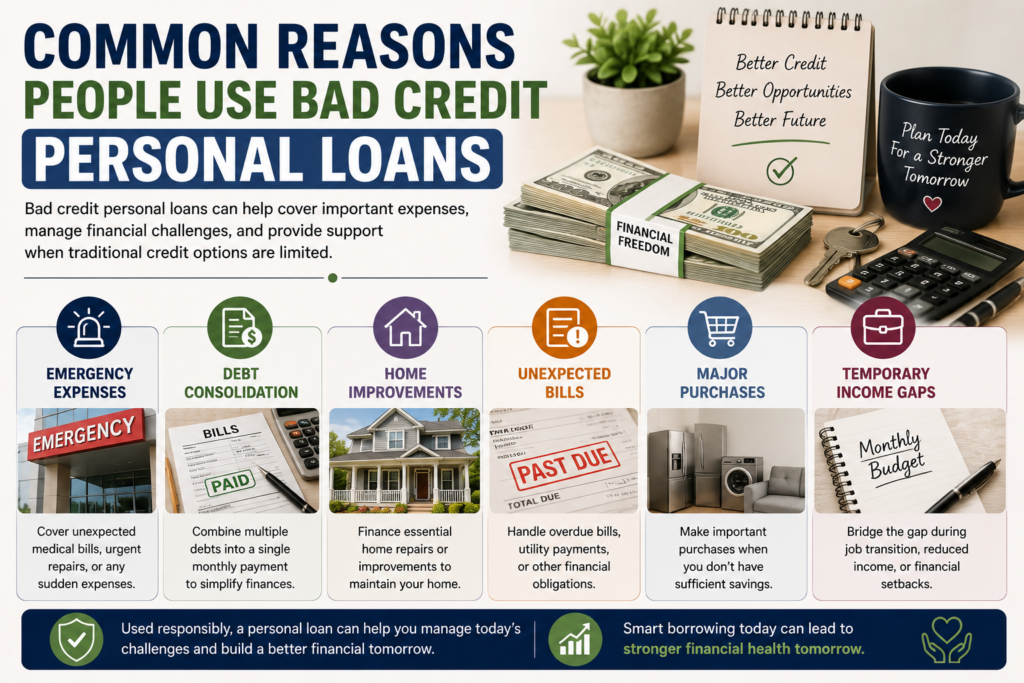
Emergency Expenses
Unexpected expenses such as medical bills, urgent home repairs, or vehicle repairs can create immediate financial needs.
Debt Consolidation
Some borrowers use personal loans to combine multiple debts into a single monthly payment.
Major Purchases
Necessary purchases may occasionally require financing assistance.
Unexpected Income Gaps
Temporary income disruptions can create short-term financial challenges.
Home Improvements
Essential repairs and improvements may sometimes require additional funding.
How Bad Credit Personal Loans Work
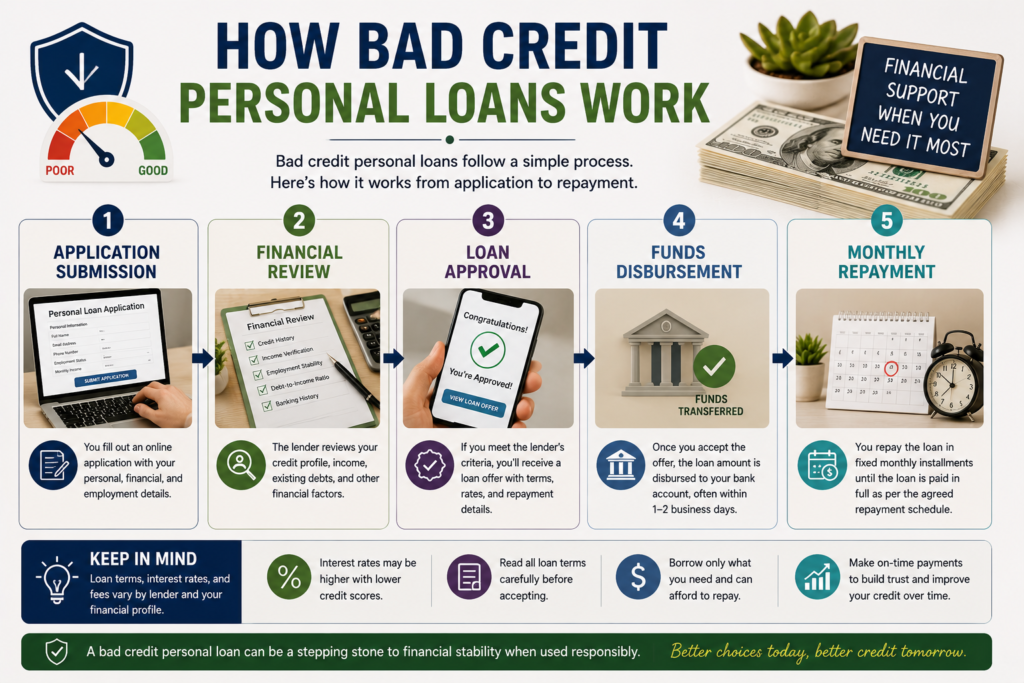
Application Submission
Borrowers provide personal, financial, and employment information.
Credit and Financial Review
Lenders evaluate the applicant’s financial situation and repayment ability.
Loan Approval
Eligible applicants receive loan offers that outline terms and repayment conditions.
Fund Disbursement
Approved loan funds are provided according to lender procedures.
Monthly Repayment
Borrowers repay the loan through scheduled monthly installments.
Can You Get a Personal Loan with Bad Credit?
Yes. Many lenders offer loan products specifically designed for borrowers with lower credit scores.
However, approval is not guaranteed. Lenders often consider additional factors beyond credit scores, including:
- Income stability
- Employment status
- Existing debt obligations
- Banking history
- Overall financial profile
Every lender uses its own eligibility criteria and approval process.
Benefits of Bad Credit Personal Loans
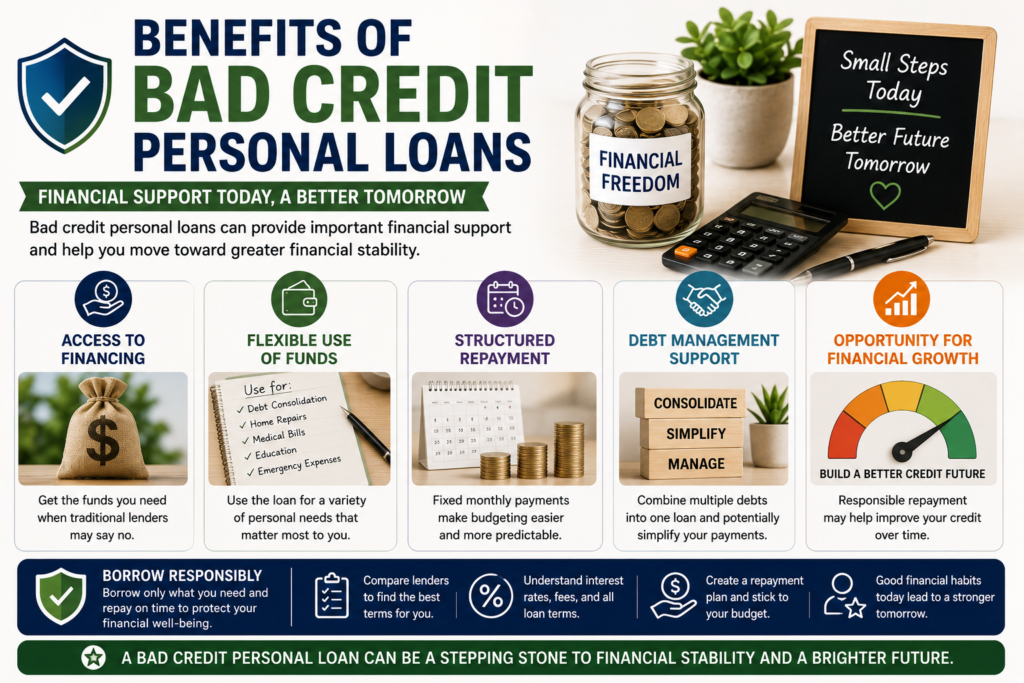
Access to Financing
These loans may provide funding opportunities when traditional financing is unavailable.
Flexible Use of Funds
Loan proceeds can often be used for a variety of personal expenses.
Structured Repayment
Fixed monthly payments can help borrowers budget more effectively.
Opportunity to Demonstrate Responsible Repayment
Consistent repayment may support long-term financial improvement.
Debt Management Support
Some borrowers use personal loans to simplify financial obligations.
Potential Risks and Considerations
Higher Interest Costs
Borrowers with lower credit scores may face higher borrowing costs.
Additional Fees
Some lenders may charge origination or administrative fees.
Risk of Over-Borrowing
Borrowing more than necessary can increase financial strain.
Long-Term Financial Commitment
Loan repayments remain a financial responsibility throughout the repayment period.
Factors Lenders May Consider
Credit History
Past borrowing behavior may influence lending decisions.
Income Verification
Lenders often evaluate repayment capacity through income documentation.
Employment Stability
Stable employment may strengthen an application.
Debt-to-Income Ratio
Existing debt obligations may affect approval decisions.
Banking Information
Banking history may be reviewed as part of the application process.
Eligibility Requirements
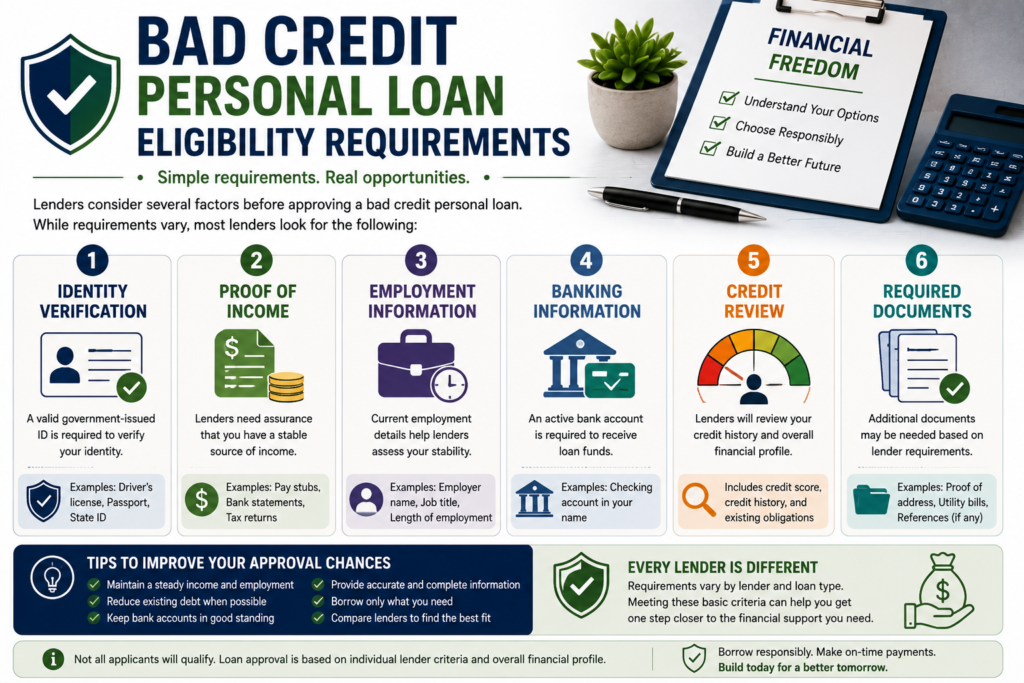
Requirements vary by lender but commonly include:
Identity Verification
Government-issued identification is often required.
Proof of Income
Applicants may need to provide evidence of stable income.
Employment Information
Employment details help lenders assess repayment capability.
Active Bank Account
Many lenders require an active checking account.
Residency Requirements
Applicants may need to meet location-specific eligibility criteria.
Documents Commonly Required
Applicants may be asked to provide:
- Government-issued ID
- Proof of income
- Employment verification
- Bank statements
- Proof of address
- Additional supporting documents if required
Tips for Improving Approval Chances
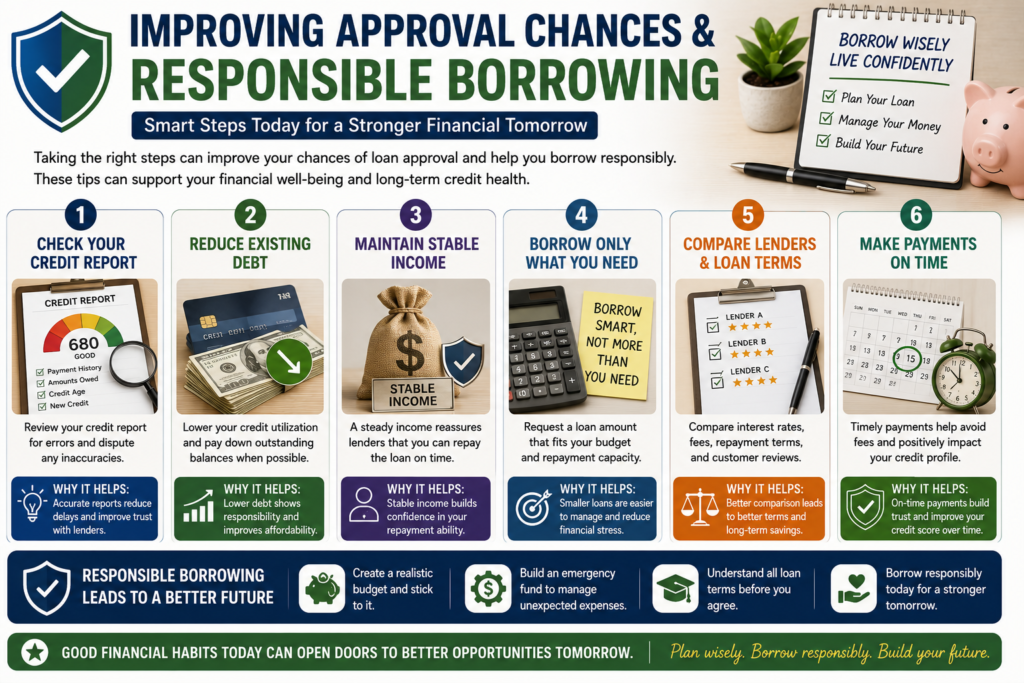
Verify Your Credit Report
Review your credit report for errors before applying.
Maintain Stable Income
Consistent income can strengthen your application.
Reduce Existing Debt
Lower debt obligations may improve your financial profile.
Borrow Only What You Need
Requesting a realistic loan amount may improve affordability.
Compare Multiple Lenders
Comparing lenders can help identify suitable options.
Alternatives to Bad Credit Personal Loans
Credit Union Loans
Credit unions may offer financing options for eligible members.
Secured Loans
Some borrowers explore secured lending products.
Family Assistance
Trusted family support may reduce borrowing needs.
Emergency Savings
Savings can help avoid borrowing costs when available.
Financial Counseling
Professional financial guidance may assist with long-term planning.
Frequently Asked Questions
What is considered bad credit?
Credit scoring models vary, and lenders use different criteria when evaluating applicants.
Can I get approved with a low credit score?
Approval depends on lender requirements and your overall financial profile.
Do bad credit personal loans require collateral?
Many are unsecured, although lender requirements vary.
Can these loans help improve credit?
Responsible repayment behavior may support long-term financial improvement.
Should I compare lenders?
Yes. Comparing lenders can help borrowers evaluate terms, costs, and repayment options.
Conclusion
Bad credit personal loans can provide access to financing for individuals facing credit challenges. While these loans may help cover important expenses and support financial goals, responsible borrowing remains essential.
Understanding eligibility requirements, comparing available options, evaluating repayment obligations, and borrowing only what is necessary can help borrowers make informed financial decisions. With careful planning and consistent repayment habits, bad credit personal loans may also serve as a stepping stone toward stronger long-term financial health.