

Introduction
A wedding is one of life’s most memorable milestones. For many couples, it represents the beginning of a new chapter filled with excitement, commitment, and future plans. However, wedding celebrations often involve significant expenses, including venue costs, catering, photography, decorations, attire, transportation, and entertainment.
While some couples choose to finance their wedding through savings, others may explore financing options to help manage costs. Wedding loans are one option that can provide funds to cover wedding-related expenses while allowing couples to spread repayment over time.
This comprehensive guide explains how wedding loans work, their potential benefits, important considerations, eligibility requirements, and strategies for responsible wedding budgeting.
What Is a Wedding Loan?
A wedding loan is generally a personal loan that is used to finance wedding-related expenses. Rather than paying all costs upfront, borrowers receive a lump sum of funds and repay the loan through scheduled monthly installments over a predetermined period.
Wedding loans are typically unsecured, meaning they generally do not require collateral. Borrowers can use the funds for various aspects of wedding planning depending on lender terms and personal financial needs.
Common Wedding Expenses Covered by Wedding Loans
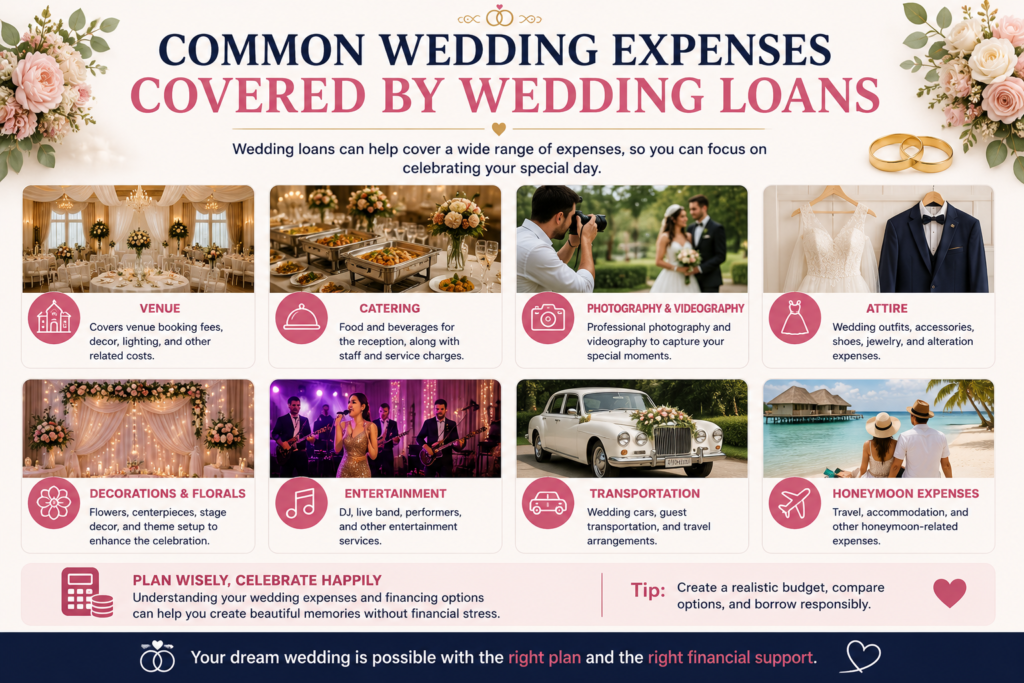
Wedding Venue
Venue rental is often one of the largest wedding expenses.
Catering Services
Food and beverage costs can represent a significant portion of the wedding budget.
Wedding Photography and Videography
Professional photographers and videographers help preserve memories of the special day.
Wedding Attire
Expenses may include wedding dresses, suits, accessories, and alterations.
Decorations and Floral Arrangements
Decorations help create the desired atmosphere and theme.
Entertainment
Many couples budget for live music, DJs, performers, or other entertainment services.
Transportation
Transportation costs may include wedding vehicles, guest transportation, or travel arrangements.
Honeymoon Expenses
Some couples use wedding financing to help manage honeymoon-related travel expenses.
How Wedding Loans Work
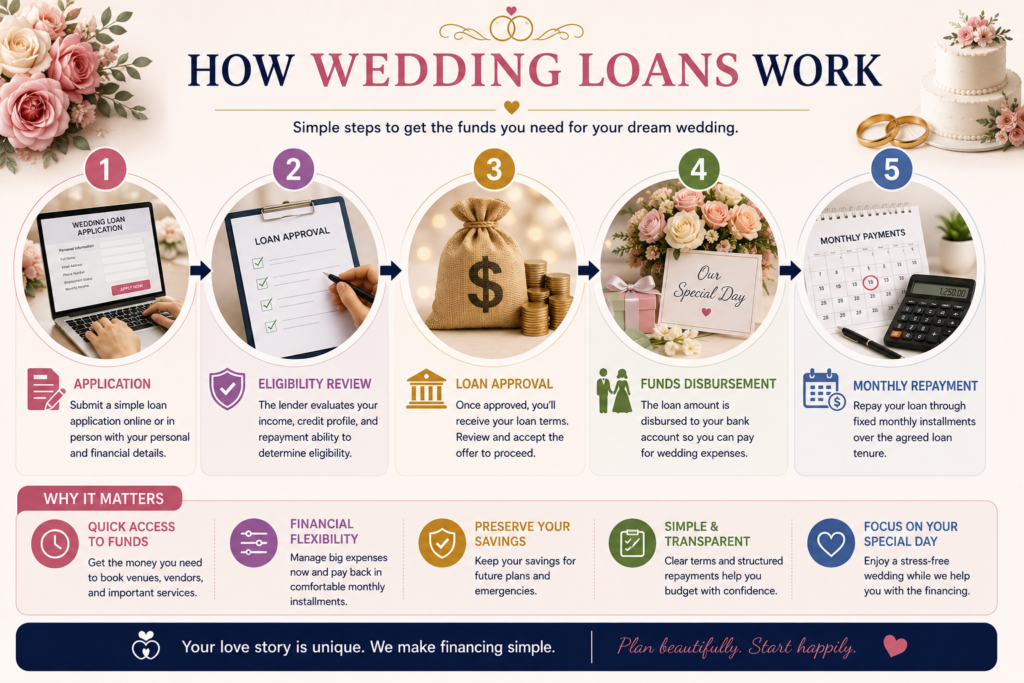
Application Process
Borrowers submit personal and financial information to a lender.
Eligibility Review
Lenders evaluate factors such as income, employment status, and financial profile.
Approval Decision
Approved applicants receive loan terms outlining repayment schedules and loan conditions.
Fund Disbursement
Funds are provided according to lender procedures and can be used for wedding-related expenses.
Monthly Repayment
Borrowers repay the loan through regular monthly installments over the agreed term.
Benefits of Wedding Loans
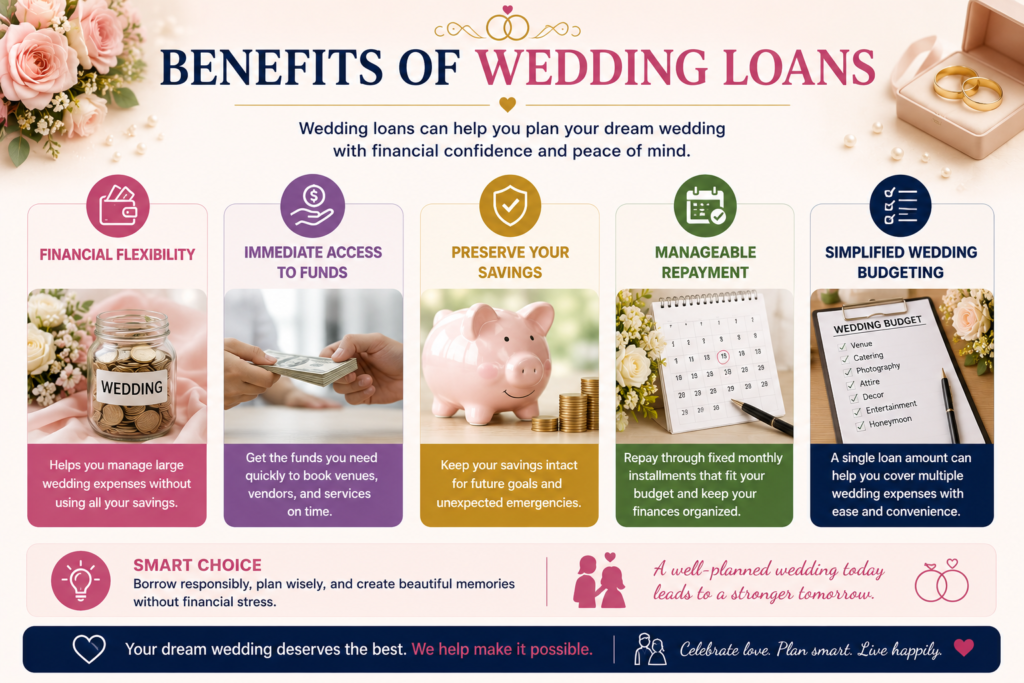
Financial Flexibility
Wedding loans can help couples manage large expenses without using all available savings.
Structured Repayment
Predictable monthly payments may make budgeting easier.
Immediate Access to Funds
Financing may provide access to funds needed for deposits and vendor payments.
Preserve Emergency Savings
Some couples prefer maintaining emergency funds rather than using all available cash for wedding expenses.
Simplified Expense Management
A single loan may help organize wedding financing more effectively.
Potential Risks and Considerations
Long-Term Financial Commitment
Loan repayments continue after the wedding celebration ends.
Interest Costs
Borrowers should understand the total cost of financing before accepting a loan.
Budget Management
Borrowing beyond realistic repayment capabilities can create financial stress.
Starting Marriage with Debt
Couples should carefully evaluate whether financing aligns with their long-term financial goals.
Eligibility Requirements
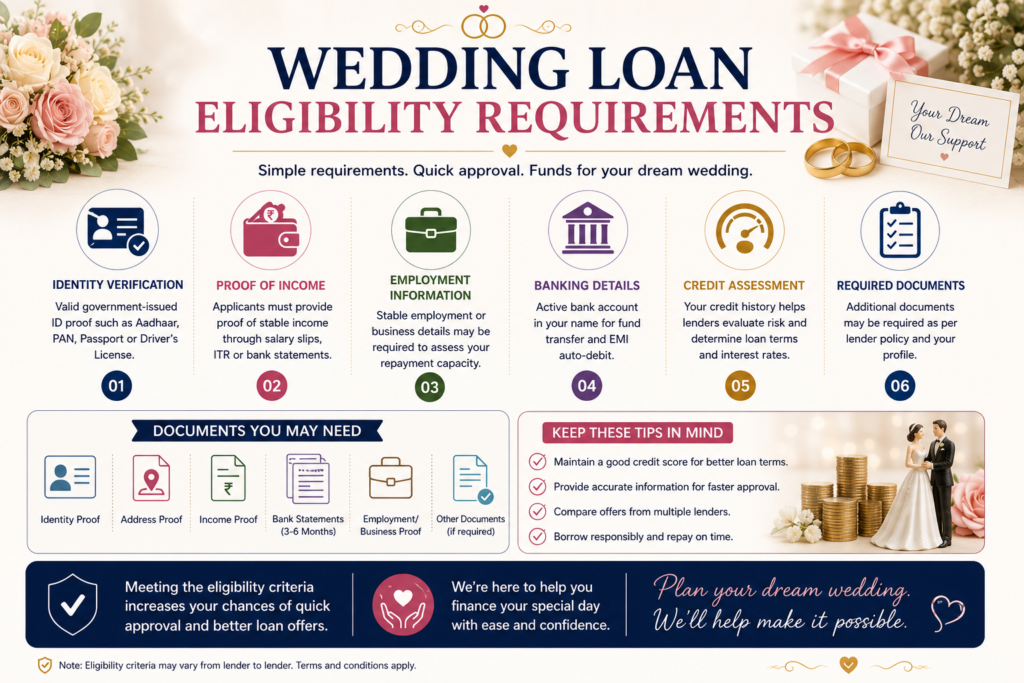
Requirements vary by lender but commonly include:
Identity Verification
Government-issued identification may be required.
Proof of Income
Lenders often evaluate income stability and repayment capacity.
Employment Information
Employment history may be reviewed during the application process.
Banking Information
Applicants may need an active bank account.
Credit Assessment
Financial history may influence approval decisions and loan terms.
Documents Commonly Required
Applicants may be asked to provide:
- Government-issued identification
- Proof of income
- Employment verification
- Bank statements
- Proof of address
- Additional supporting documents if required
Wedding Budgeting Tips Before Borrowing
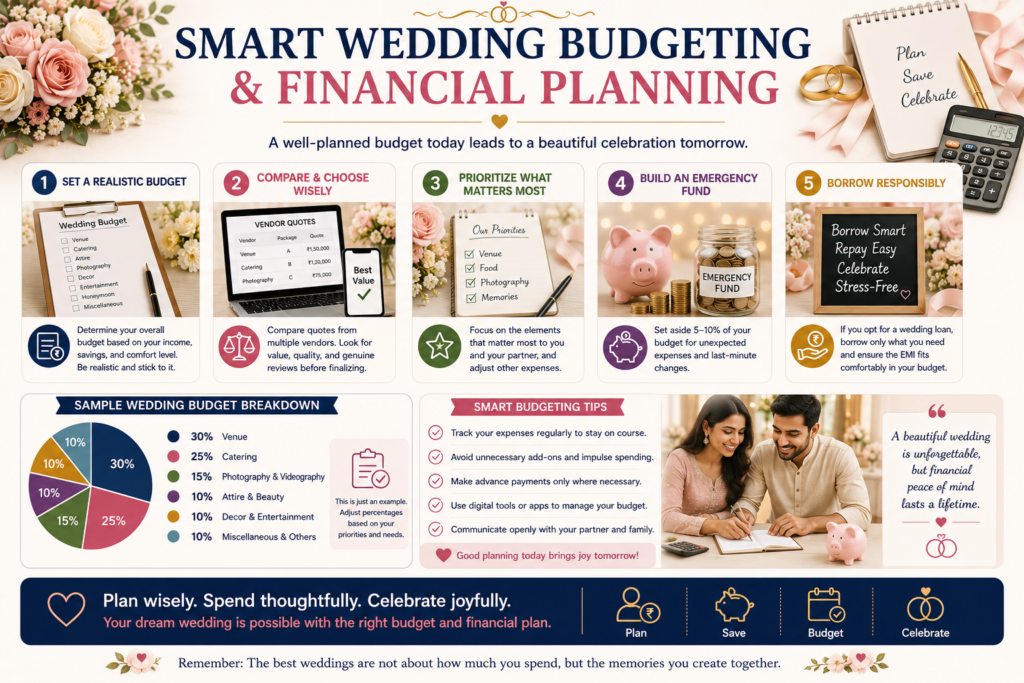
Set a Realistic Budget
Determine how much you can comfortably afford before planning expenses.
Prioritize Important Expenses
Focus spending on the elements that matter most to you.
Compare Vendor Quotes
Obtaining multiple quotes may help identify cost-saving opportunities.
Build a Contingency Fund
Unexpected wedding expenses can occur during the planning process.
Borrow Only What You Need
Avoid financing expenses beyond your realistic repayment capacity.
Alternatives to Wedding Loans
Personal Savings
Savings can help reduce borrowing needs and interest costs.
Family Contributions
Some couples receive financial support from family members.
Extended Engagement Period
Additional planning time may allow more opportunities to save.
Smaller Wedding Celebrations
Reducing guest counts and simplifying plans may significantly lower costs.
Vendor Payment Plans
Some wedding vendors offer installment payment options.
Frequently Asked Questions
What is a wedding loan?
A wedding loan is typically a personal loan used to finance wedding-related expenses.
Can wedding loans be used for honeymoon expenses?
Depending on lender terms, funds may be used for various wedding-related costs, including honeymoon travel.
Do wedding loans require collateral?
Many wedding loans are unsecured, though lender requirements vary.
Should couples borrow for a wedding?
The decision depends on individual financial circumstances, goals, and repayment ability.
Is budgeting important before applying?
Yes. Careful budgeting helps ensure wedding expenses remain manageable.
Conclusion
Wedding loans can provide financial flexibility for couples planning their special day. By understanding how wedding financing works, evaluating repayment obligations, comparing available options, and maintaining a realistic budget, couples can make informed decisions that support both their wedding plans and long-term financial well-being.
A beautiful wedding does not necessarily require excessive spending. Careful planning, responsible budgeting, and thoughtful financial decisions can help create a memorable celebration while supporting a strong financial future together.