
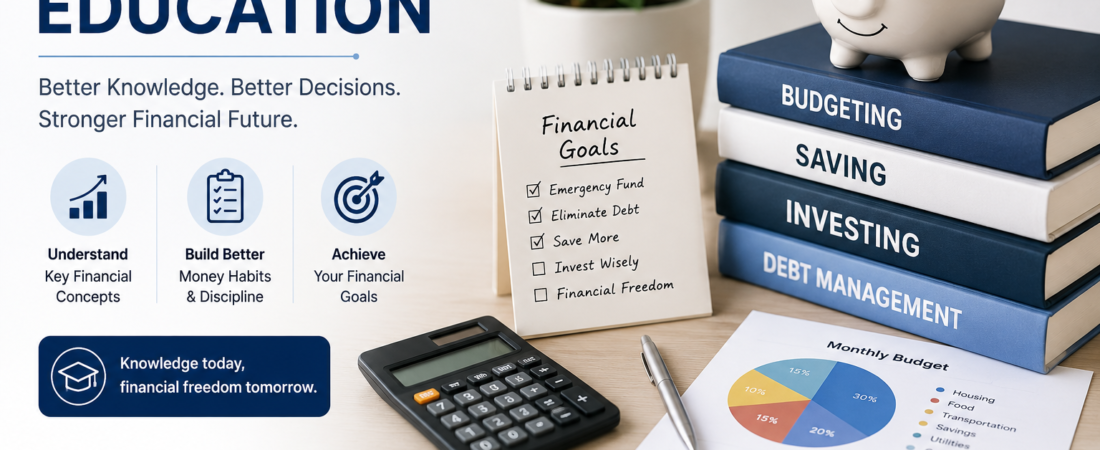
Financial Education: The Foundation of Long-Term Financial Success
Introduction
Financial education is one of the most valuable life skills a person can develop. In an increasingly complex financial world, understanding how money works empowers individuals to make informed decisions, avoid costly mistakes, and build a secure future. Whether managing daily expenses, saving for major life goals, investing for retirement, or handling debt responsibly, financial knowledge plays a critical role in achieving long-term financial well-being.
Unfortunately, many people enter adulthood without receiving formal financial education. As a result, they may struggle with budgeting, debt management, credit scores, or investment planning. Financial education helps bridge this gap by providing practical knowledge and strategies that support smarter money management and greater financial confidence.
This guide explores the key principles of financial education, why it matters, and how individuals can develop healthy financial habits that lead to lasting financial success.
What Is Financial Education?
Financial education refers to the process of learning and understanding financial concepts that help individuals manage their money effectively. It includes knowledge about budgeting, saving, investing, borrowing, credit management, insurance, retirement planning, and financial goal setting.
The primary purpose of financial education is to equip people with the skills needed to make sound financial decisions throughout their lives.
Financial education is not about becoming a financial expert. Rather, it focuses on building practical knowledge that allows individuals to navigate everyday financial situations with confidence and responsibility.
Why Financial Education Matters
Financial education provides the foundation for making informed decisions about money. Without financial knowledge, individuals may be more vulnerable to excessive debt, poor financial choices, scams, and long-term financial instability.
Key Benefits of Financial Education
Better Money Management
Financial education helps individuals understand how to manage income, control expenses, and maintain a balanced budget.
Improved Financial Confidence
Understanding financial concepts reduces uncertainty and helps people make decisions with greater confidence.
Reduced Financial Stress
People who understand budgeting, saving, and debt management are often better prepared for unexpected financial challenges.
Stronger Financial Security
Good financial habits contribute to long-term financial stability and help individuals prepare for future goals.
Better Borrowing Decisions
Financial education enables borrowers to understand loan terms, interest rates, and repayment obligations before taking on debt.
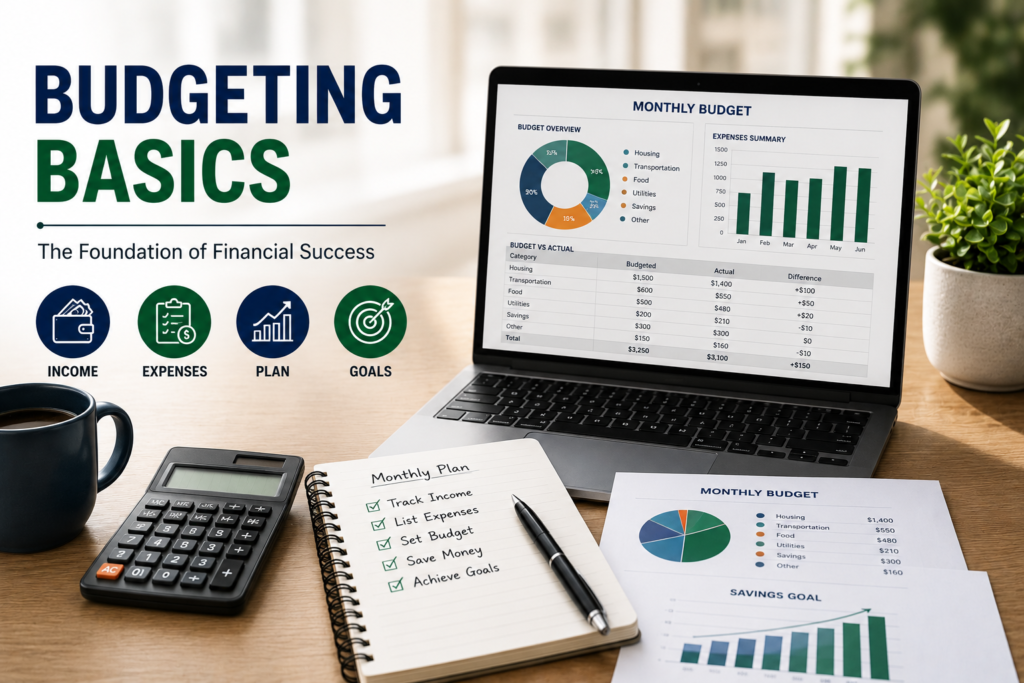
Understanding Personal Budgeting
A budget is one of the most important tools in personal finance. Budgeting involves creating a plan for how income will be spent, saved, and allocated toward financial goals.
A well-structured budget allows individuals to:
- Track income and expenses
- Identify unnecessary spending
- Build savings
- Reduce debt
- Plan for future goals
Steps to Create a Budget
Calculate Monthly Income
Determine all sources of income, including salary, freelance work, business income, or other earnings.
Track Expenses
Record all monthly expenses, including housing, transportation, food, utilities, and entertainment.
Categorize Spending
Separate expenses into essential and non-essential categories.
Set Financial Goals
Identify short-term and long-term financial objectives.
Monitor Progress
Regularly review spending patterns and adjust the budget as needed.
The Importance of Saving Money

Saving money provides financial security and creates a safety net for unexpected expenses. Developing consistent saving habits is essential for achieving financial stability.
Benefits of Saving
- Emergency preparedness
- Reduced financial stress
- Greater financial flexibility
- Ability to achieve long-term goals
- Reduced reliance on debt
Building an Emergency Fund
An emergency fund is money set aside for unexpected situations such as:
- Medical emergencies
- Job loss
- Home repairs
- Vehicle repairs
- Unexpected expenses
Financial experts often recommend maintaining several months of essential living expenses in an emergency savings account.
Understanding Credit and Credit Scores
Credit plays an important role in modern financial systems. Lenders, landlords, and financial institutions may evaluate credit history when making decisions.
What Is a Credit Score?
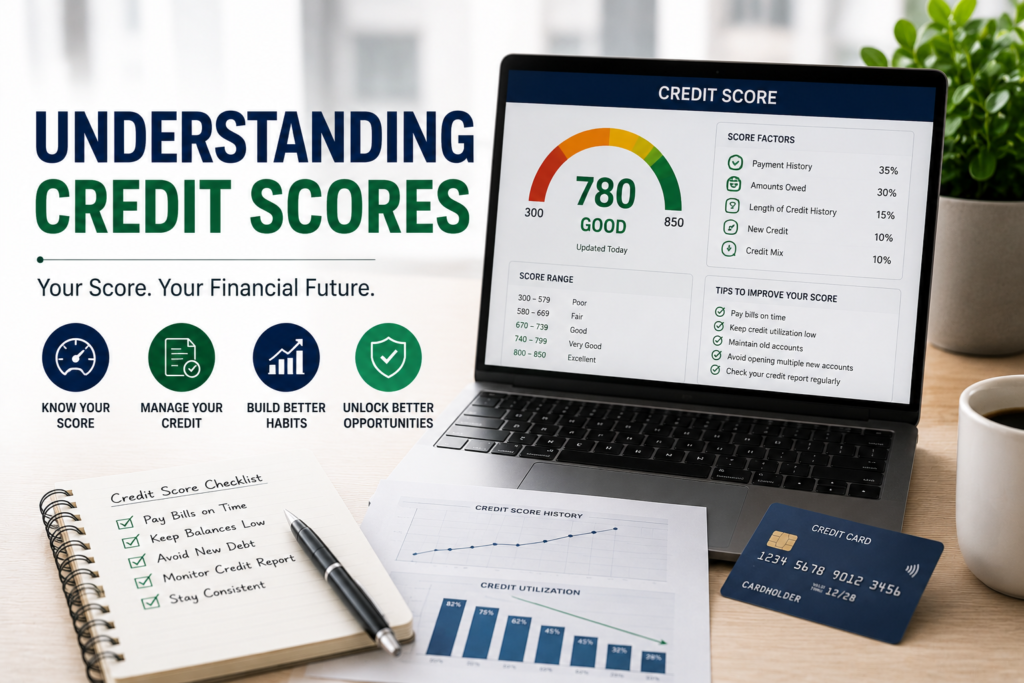
A credit score is a numerical representation of a person’s creditworthiness based on their financial history.
Credit scores are influenced by:
- Payment history
- Outstanding debt
- Length of credit history
- Credit utilization
- Types of credit accounts
Why Credit Scores Matter
A strong credit profile may help individuals:
- Qualify for loans
- Receive better interest rates
- Access financial products
- Improve borrowing opportunities
Tips for Maintaining Good Credit
- Pay bills on time
- Keep debt levels manageable
- Avoid unnecessary borrowing
- Monitor credit reports regularly
- Maintain responsible credit usage
Managing Debt Responsibly
Debt can be a useful financial tool when managed responsibly. However, excessive debt can create financial challenges and limit future opportunities.
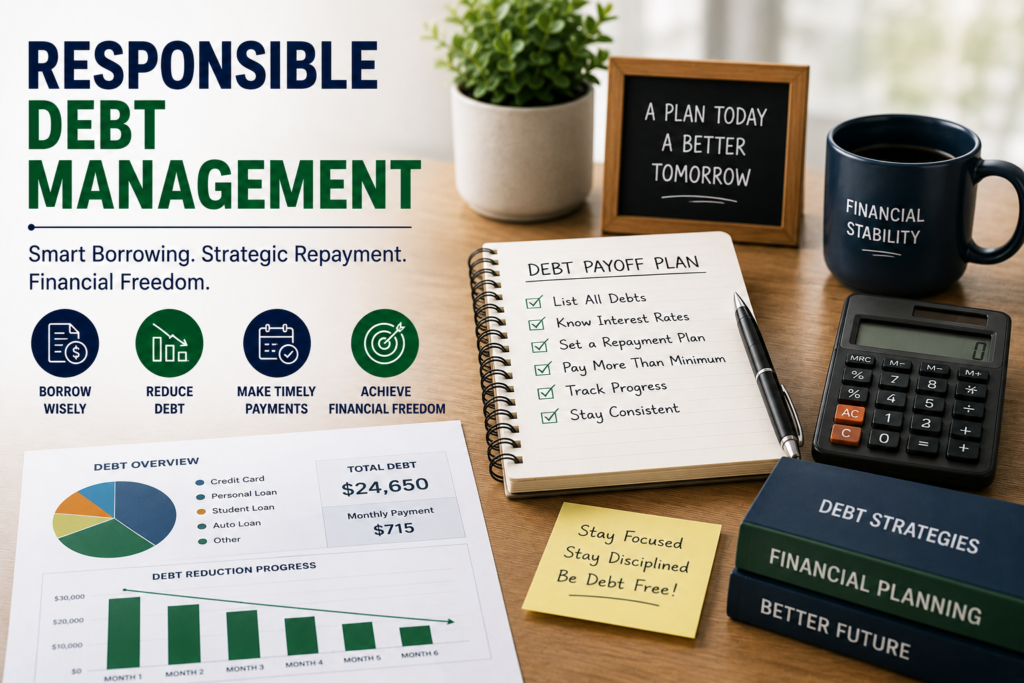
Common Types of Deb
- Personal loans
- Credit card debt
- Student loans
- Auto loans
- Mortgage loans
Responsible Debt Management Strategies
Borrow Only What You Need
Avoid taking on unnecessary financial obligations.
Make Payments on Time
Consistent repayment helps maintain financial health and creditworthiness.
Understand Loan Terms
Review interest rates, fees, repayment periods, and other conditions before borrowing.
Prioritize High-Interest Debt
Paying down high-interest debt first may reduce overall borrowing costs.
Investing for Long-Term Growth
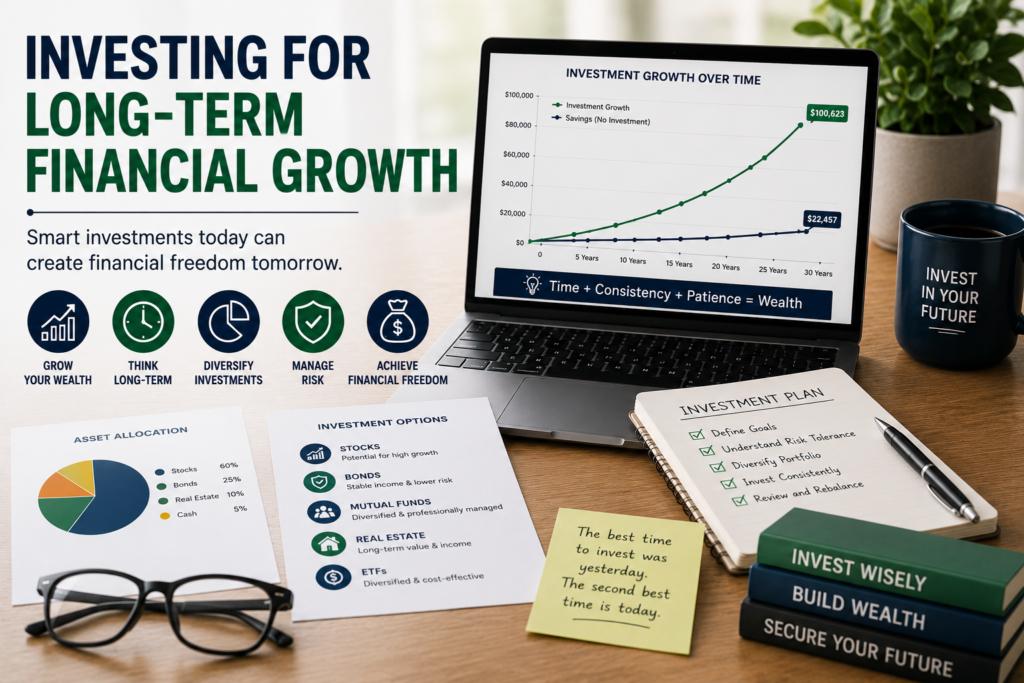
Investing allows individuals to grow wealth over time and work toward long-term financial goals.
While investing involves risk, it can provide opportunities for financial growth beyond traditional savings accounts.
Common Investment Options
- Stocks
- Bonds
- Mutual funds
- Exchange-traded funds (ETFs)
- Retirement accounts
- Real estate investments
Benefits of Investing
- Wealth accumulation
- Inflation protection
- Long-term financial growth
- Retirement preparation
Before investing, individuals should understand their risk tolerance, investment objectives, and time horizon.
Financial Goal Setting
Setting financial goals provides direction and helps individuals make intentional decisions about money.
Short-Term Goals
Examples include:
- Building an emergency fund
- Paying off credit card debt
- Saving for a vacation
- Purchasing household items
Long-Term Goals
Examples include:
- Homeownership
- Retirement planning
- Business development
- Children’s education
SMART Financial Goals
Financial goals should be:
- Specific
- Measurable
- Achievable
- Relevant
- Time-bound
Common Financial Mistakes to Avoid
Many financial challenges result from avoidable mistakes.
Living Beyond Your Means
Consistently spending more than you earn can lead to debt and financial stress.
Failing to Budget
Without a budget, it becomes difficult to track spending and manage finances effectively.
Neglecting Savings
Failing to save for emergencies can create significant financial hardship.
Ignoring Debt Obligations
Late payments and unmanaged debt can negatively impact financial stability.
Making Emotional Financial Decisions
Financial decisions should be based on careful planning rather than impulse or emotion.
Developing Healthy Financial Habits
Financial success is often the result of consistent habits rather than one-time actions.
Healthy Financial Habits Include:
- Tracking expenses
- Following a budget
- Saving regularly
- Paying bills on time
- Reviewing financial goals
- Avoiding unnecessary debt
- Continuously improving financial knowledge
Small improvements made consistently over time can lead to significant financial progress.
Frequently Asked Questions
What is financial education?
Financial education is the process of learning financial concepts that help individuals manage money, save, invest, budget, and make informed financial decisions.
Why is financial education important?
Financial education helps individuals develop money management skills, reduce financial stress, avoid debt problems, and build long-term financial security.
How can I improve my financial literacy?
You can improve financial literacy by reading educational resources, following reputable financial experts, creating a budget, tracking expenses, and continuously learning about personal finance.
What is the first step toward financial success?
The first step is understanding your current financial situation and creating a realistic budget that aligns with your goals.
Can financial education help reduce debt?
Yes. Financial education teaches responsible borrowing, budgeting, and debt management strategies that can help individuals reduce and manage debt effectively.
Conclusion
Financial education is a lifelong investment that delivers benefits far beyond money management. By understanding budgeting, saving, credit, debt, investing, and financial planning, individuals can make informed decisions that support both short-term needs and long-term goals.
Building financial literacy empowers people to take control of their finances, reduce financial stress, and create opportunities for future growth. Regardless of income level or financial background, improving financial education is one of the most effective steps toward achieving lasting financial success and security.